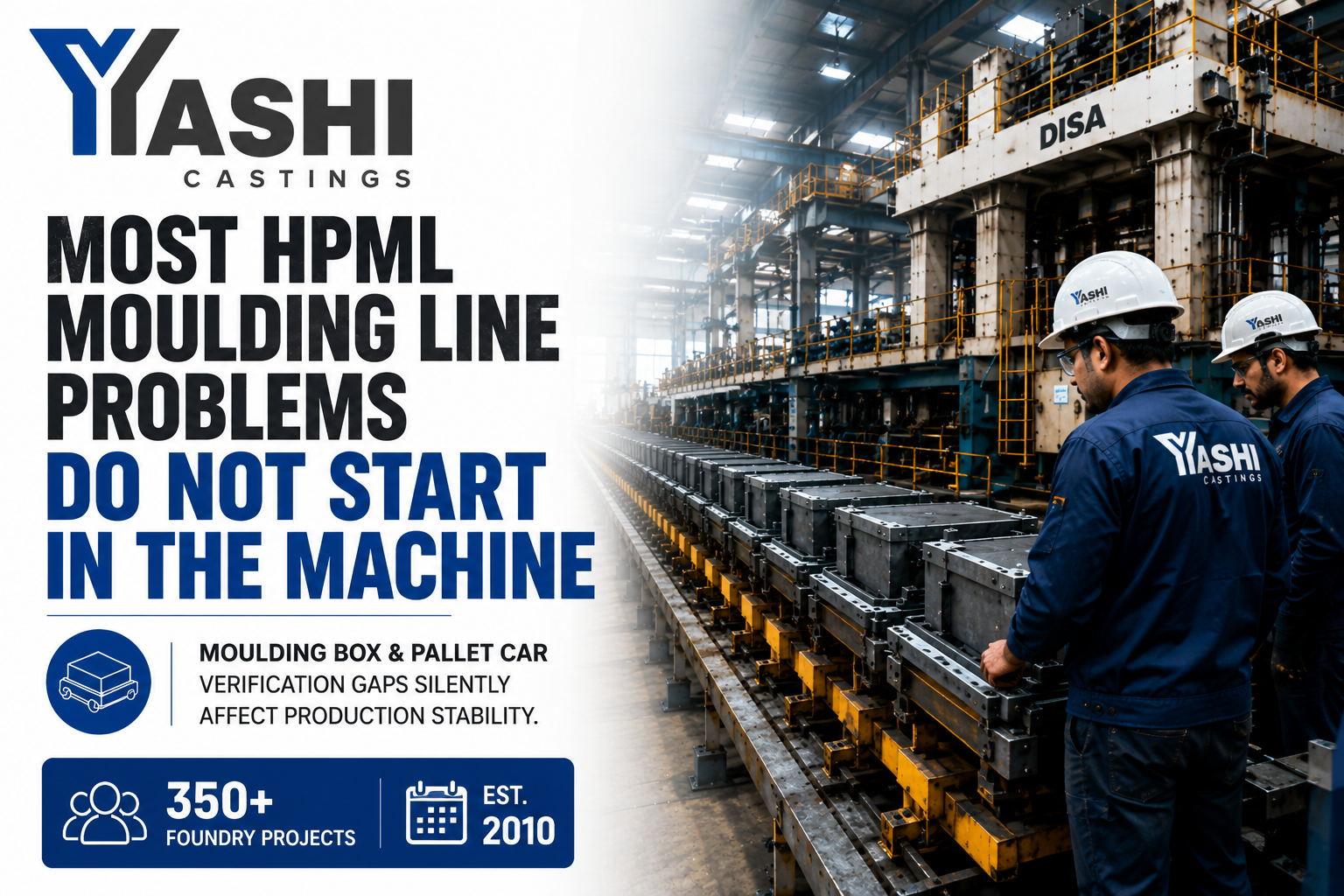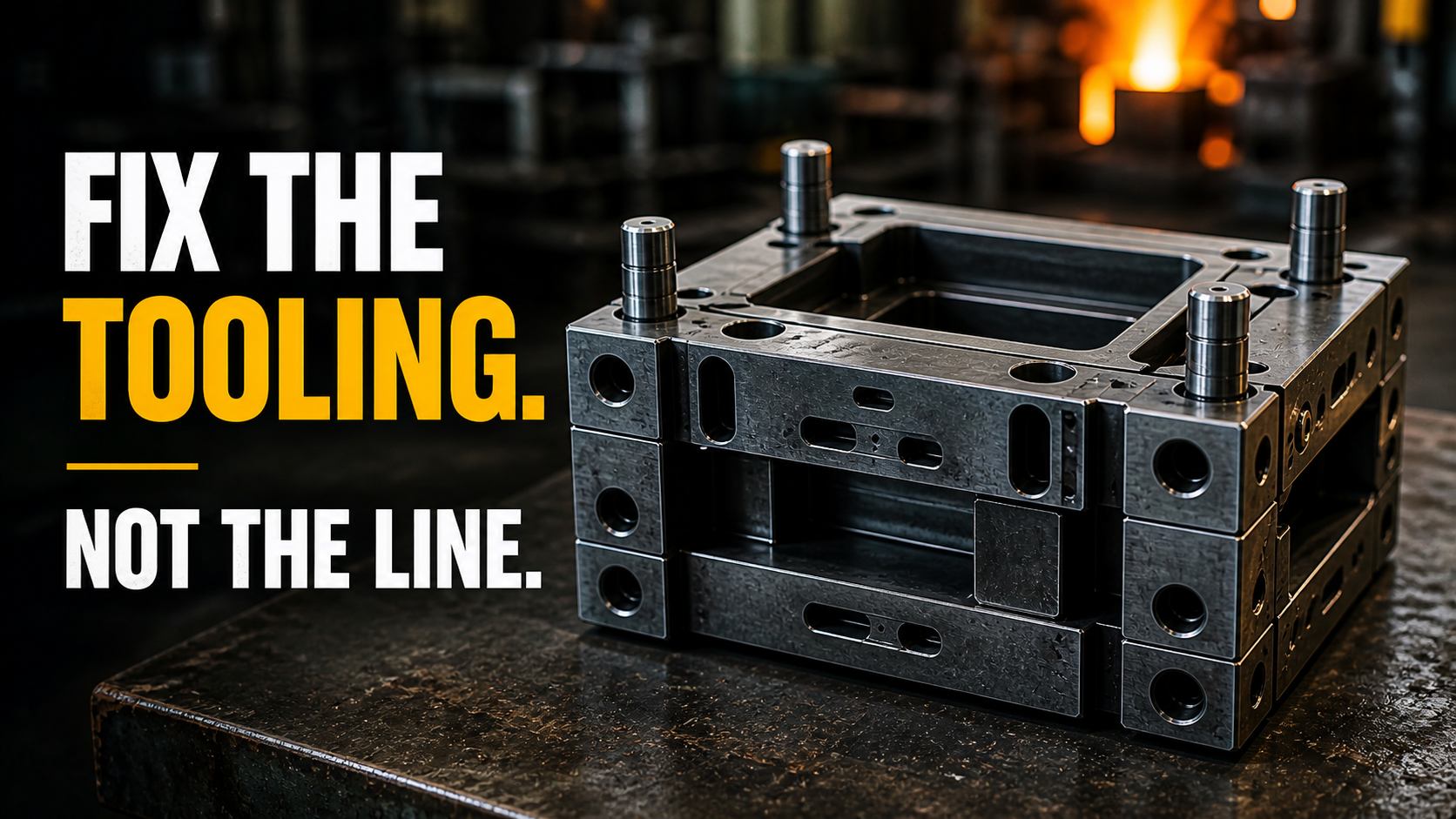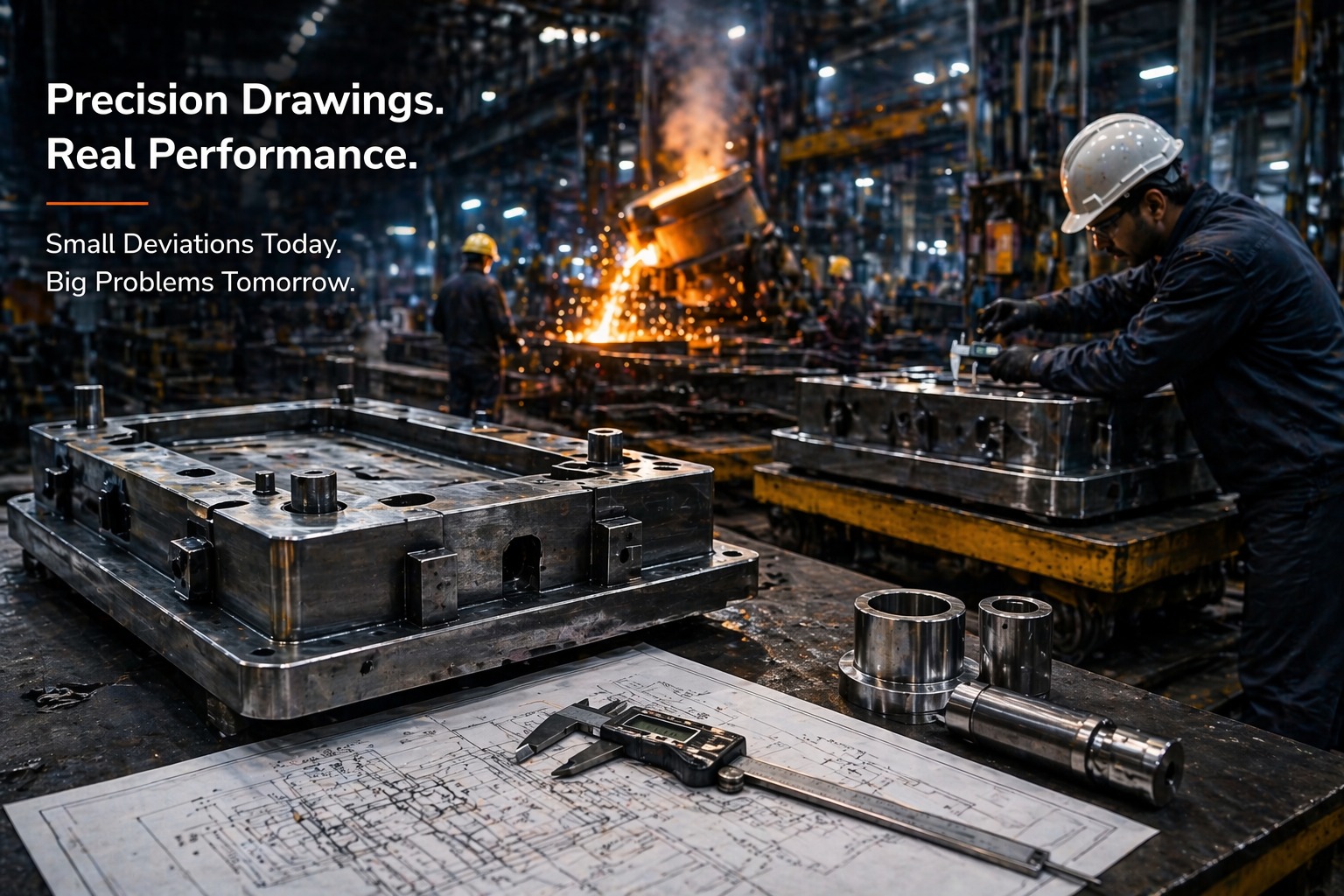
Why small deviations in mould boxes lead to big problems in foundries
Table of Contents
ToggleIntroduction: Why Foundry Lines Fail Without Warning
Production looks stable.
Sand is flowing. Moulds are closing.
Then suddenly—mismatch.
The cope doesn’t sit properly.
The drag needs adjustment.
“Thoda adjust karo…”
Within days:
• Rejections increase
• Cycle time becomes inconsistent
• Operators lose confidence
• OEM support gets pulled in
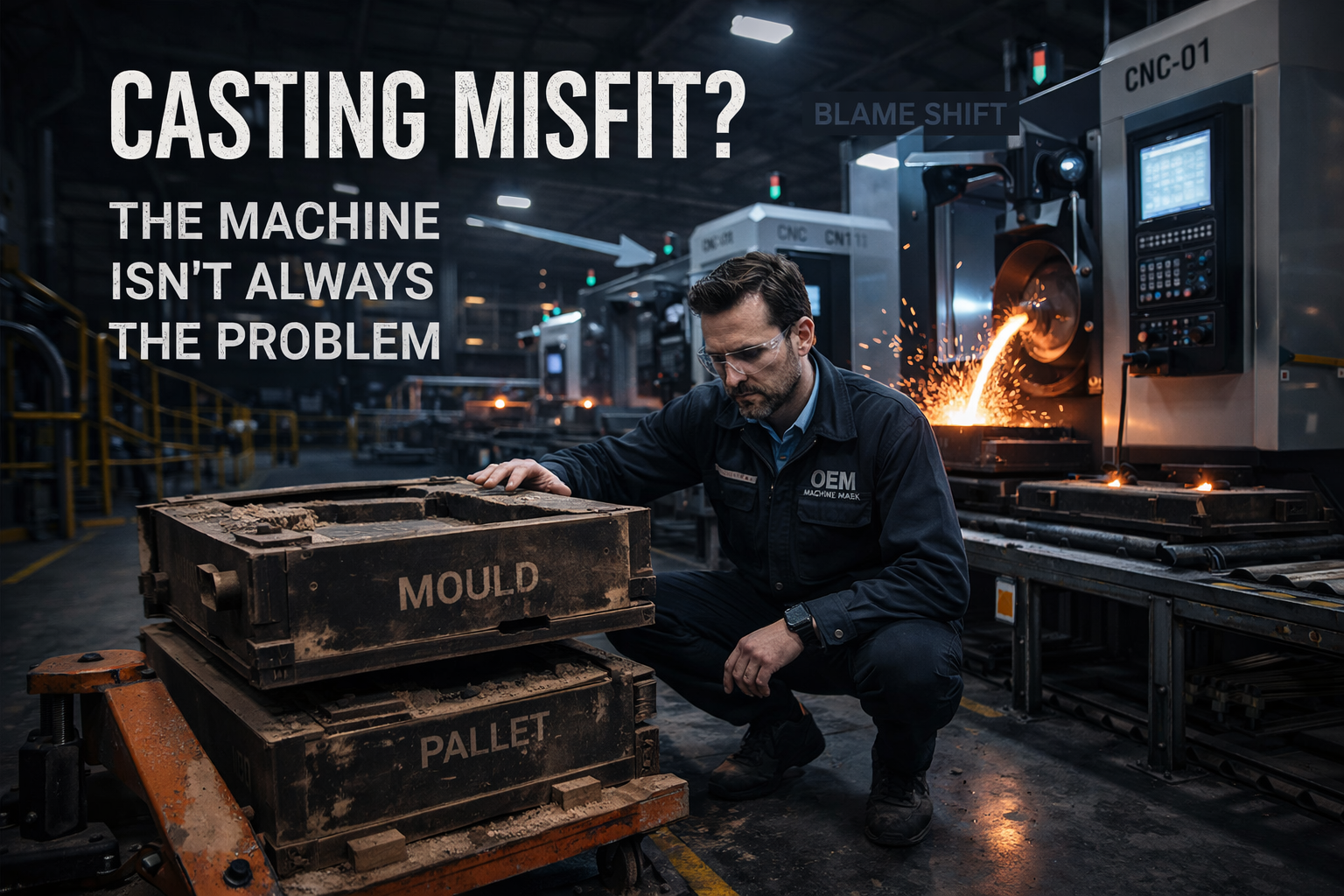
👉 Most foundries assume the machine is the problem.
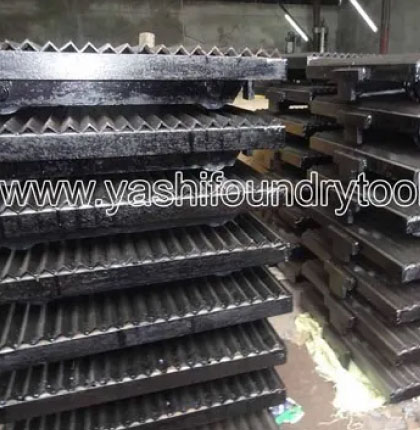
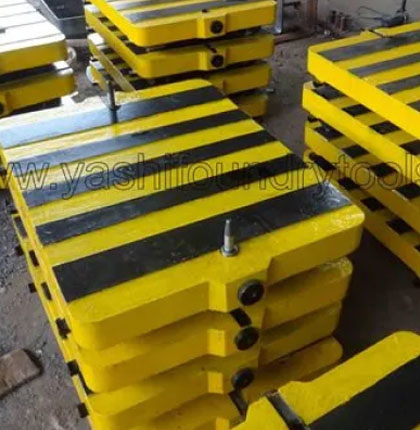
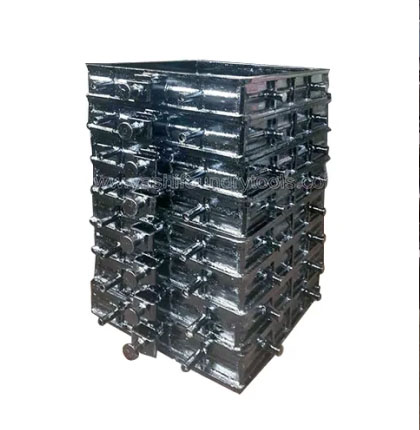
👉 In reality, many issues originate from casting defects due to tooling inaccuracies in mould boxes used in automatic lines
👉 Learn more about precision mould boxes:
What You’ll Learn in This Article
• Where casting defects due to tooling actually begin
• Why identical machines give different results
• The hidden cost of tooling inaccuracies
• What to check before selecting a tooling partner
The Drawing vs Reality Gap in Foundries
OEM machine makers design moulding lines with precision.
Every parameter is engineered:
• Mould box dimensions
• Pin center alignment
• Bush hardness
• Flange flatness
• Weight distribution
👉 These parameters directly impact foundry tooling performance
👉 A drawing is not a suggestion. It is a specification.
Yet, on the shopfloor, execution often tells a different story.
Common Causes of Casting Defects Due to Tooling
Small deviations may go unnoticed initially—but they lead to serious problems over time.
1. Incorrect Material Grade
Using lower-grade material instead of FG-260
→ leads to wear, deformation, and inconsistency
2. Pin Center Misalignment
Initial closure may appear fine
→ later causes mismatch defects and rejection
3. Bush Hardness Issues
Improper hardness
→ leads to faster wear and loss of alignment
4. Flange Flatness Problems
Looks flat visually
→ results in sand leakage and sealing issues
5. Poor Machining Accuracy
Replacing CNC with conventional machining
→ leads to variation and lack of repeatability
👉 Individually manageable
👉 Together—they result in casting defects due to tooling, affecting the entire moulding line
Case Study: Same Machine, Different Outcome
👉 See how precision tooling enabled a successful first pour:
Two foundries. Same OEM. Same drawings.
Foundry A
“Close enough” execution
Initial stability
Then:
• Mismatch defects
• Cycle instability
• OEM intervention
👉 Machine gets blamed
Foundry B
Strict adherence to drawings
CNC machining
Verified dimensions
After one year:
• Stable production
• No major issues
• No OEM dependency
👉 Same machine. Same drawing. Different execution
The Hidden Cost of Casting Defects Due to Tooling
Most decisions focus on price.
But the real cost appears later:
• Downtime
• Rework
• Increased rejection
• Operator dependency
• Loss of confidence
👉 Industry bodies like:
https://www.indianfoundry.org
(External – IIF)
https://www.afsinc.org
(External – AFS)
…highlight that casting defects due to tooling are a major root cause of recurring problems in foundries
How to Prevent Casting Defects Due to Tooling
Before finalizing your tooling partner, ask:
👉 “How will you follow this drawing—dimension by dimension?”
This is critical when selecting a precision tooling partner
Look for:
• Material compliance
• Controlled machining
• Inspection reports
• Measurable accuracy
👉 If the answer is unclear, execution will be too
What Precision Tooling Should Look Like
A reliable tooling partner does not interpret drawings.
They follow them.
Key requirements:
• Right material
• Controlled machining
• Verified dimensions
• Consistent repeatability
Our Approach at Yashi Castings
At Yashi Castings, this is not a claim—it is a process:
• FG-260 cast iron (Induction Furnace)
• CNC Double Column Machines & VMCs
• Verified flatness, parallelism, concentricity
• 350+ foundry projects
• Experience with DISA, Sinto & Savelli lines
👉 Because on the shopfloor—
every shortcut eventually results in casting defects due to tooling
Conclusion: Small Deviations, Big Consequences
A moulding line doesn’t fail in one day.
It fails slowly through:
• Small compromises
• Ignored tolerances
• “Manageable” deviations
By the time it becomes visible—
👉 the cost is already paid
👉 Avoiding casting defects due to tooling is critical for stable production
👉 A drawing is not a suggestion. It is a specification
FAQs
Q1. What causes casting defects in foundries?
Many defects originate from tooling inaccuracies.
Q2. Can tooling issues affect machine performance?
Yes, significantly.
Q3. How to avoid casting defects due to tooling?
By following specifications strictly and ensuring machining accuracy.
Q4. What should I check in a tooling partner?
Execution capability, not just pricing.
Let’s Talk
If you are planning a new foundry line
or facing mismatch issues—
👉 It’s time to evaluate your tooling.
📩 sales@yashicastings.com
📞 +91 8981104730
or
Contact Us – Click Here
Precision Built. On-Time Always. Built to Last.