In a moulding or foundry environment, precision is not optional. Even minor misalignment or unstable movement can lead to casting defects, excessive wear, and costly downtime.
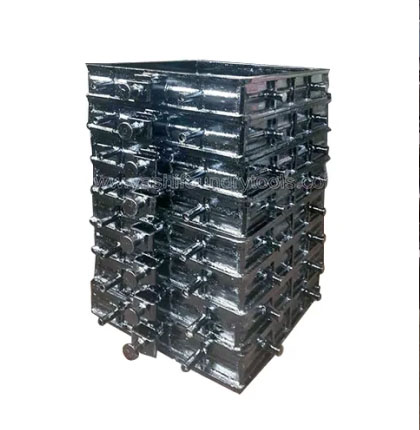
Components like Moulding Boxes for Metal Foundry, bushes, and match plates must work together with perfect alignment to ensure consistent mould accuracy and machine reliability.
Among the many precision components inside a moulding system, two bushes play a particularly critical role:
👉 Mould Box Bush
👉 Match Plate Bush
Although they may appear similar, their functions, design priorities, and production impact are quite different.
Let’s clarify.
What is a Mould Box Bush?
A Mould Box Bush is primarily responsible for guiding and aligning the mould box during machine operation.
It ensures that the mould box:
✔ Moves smoothly
✔ Remains accurately positioned
✔ Maintains alignment over repeated cycles
Why This Matters
During continuous moulding cycles, mould boxes experience:
- Repetitive sliding movement
- Mechanical loads
- Vibration
- Abrasive sand and dust
Without proper bush guidance, this may result in:
❌ Mould misalignment
❌ Uneven mould closure
❌ Flash defects
❌ Premature machine wear
Design Focus
Mould Box Bushes are engineered for:
✔ Low friction movement
✔ High wear resistance
✔ Long operational life
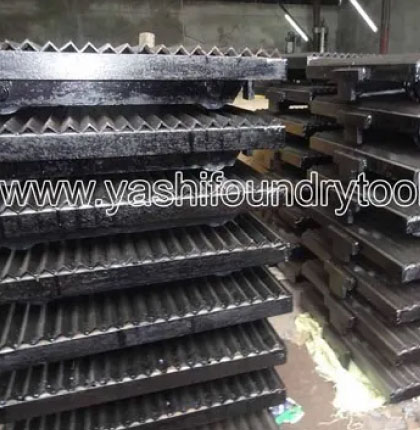
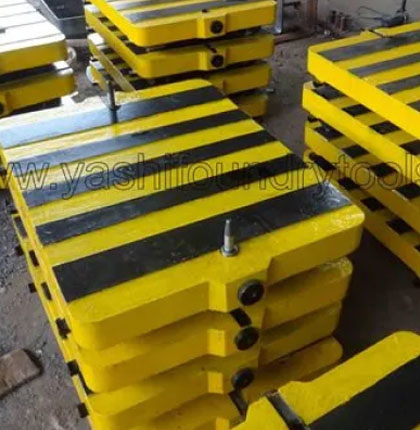
Checkout our products Moulding Boxes for Metal Foundry.
What is a Match Plate Bush?
A Match Plate Bush ensures the precise positioning of the match plate, which carries mould patterns.
Since the match plate directly defines mould cavity geometry, its alignment is critical.
Why This Matters
Improper match plate positioning may cause:
❌ Pattern mismatch
❌ Dimensional inaccuracies
❌ Casting defects
❌ Higher rejection rates
Design Focus
Unlike mould box bushes, Match Plate Bushes prioritize:
✔ Positional accuracy
✔ Rigidity
✔ Tight tolerance fit
They must withstand:
- Clamping forces
- Repetitive loading
- Alignment stress
Mould Box Bush vs Match Plate Bush – Key Differences
| Aspect | Mould Box Bush | Match Plate Bush |
|---|---|---|
| Primary Role | Guides & aligns mould box | Aligns & stabilizes match plate |
| Movement Type | Sliding / guiding motion | Precision positioning |
| Design Priority | Wear resistance & smooth movement | Accuracy & rigidity |
| Failure Impact | Vibration, mould shift | Pattern mismatch, defects |
Why the Difference Matters
Confusing these bush applications can lead to:
❌ Incorrect component selection
❌ Machine instability
❌ Higher wear rates
❌ Quality inconsistency
Correct bush usage ensures:
✅ Smooth moulding cycles
✅ Stable mould box movement
✅ Accurate pattern positioning
✅ Reduced downtime
The Supporting Role of Table Bushes
Alongside mould box and match plate bushes, Table Bushes for Moulding Machines also play a vital role.
They help:
✔ Stabilize table movement
✔ Maintain structural alignment
✔ Reduce vibration
✔ Improve mould repeatability
Proper table guidance supports overall mould accuracy and machine stability.
How Bush Quality Impacts Production
High-precision bushes contribute to:
✅ Better casting accuracy
✅ Lower rejection rates
✅ Reduced maintenance
✅ Extended machine life
Whereas worn or poor-quality bushes result in:
❌ Increased scrap
❌ Frequent breakdowns
❌ Alignment issues
❌ Production delays
Conclusion
Both bushes are essential — but serve distinct mechanical purposes:
- Mould Box Bush → Ensures stable mould box guidance
- Match Plate Bush → Ensures precise match plate alignment
Together with Table Bushes and accurately built Moulding Boxes for Metal Foundry, they maintain the precision, stability, and efficiency of moulding machines.
Investing in quality-engineered components directly improves:
✔ Mould accuracy
✔ Casting consistency
✔ Machine reliability
✔ Production efficiency
🔧 Related Products
Mould Box Bush
Match Plate Bush
Table Bush for Moulding Machine
Moulding Boxes for Metal Foundry
🚀 Looking for Reliable Foundry Components?
Choose precision components designed for:
✔ Accuracy
✔ Durability
✔ Wear resistance
✔ Long service life
Contact us today for specifications and custom requirements.