Description
Overview
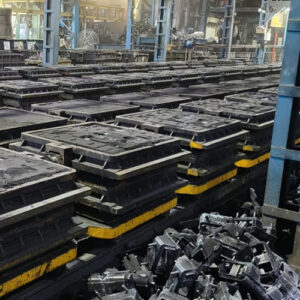
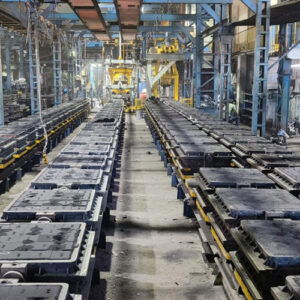
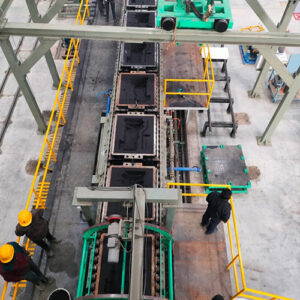
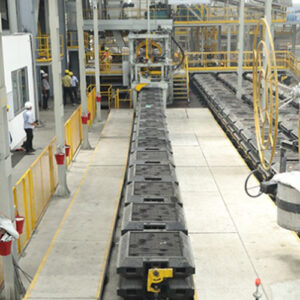
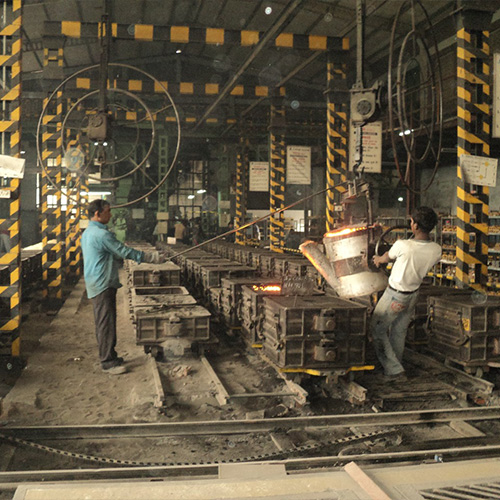
Plant Use Case – 2 showcases a typical foundry pouring line where molten metal is poured into prepared moulds moving along a mould handling system. This setup highlights how a well-designed mould transport and handling system ensures stable mould positioning, safe pouring operations, and consistent casting quality during high-volume production.
In modern foundries, moulds travel through multiple stages including mould preparation, mould closing, pouring, cooling, and shakeout. Efficient mould handling systems help maintain alignment, reduce mould disturbances, and support smooth casting operations across the entire moulding line.
Key Features
• Continuous mould movement through the pouring station
• Stable mould positioning during molten metal pouring
• Efficient mould handling system for automated production lines
• Controlled and safe pouring operations in foundry environments
• Optimized layout for high-volume casting production
Benefits for Foundries
• Improves casting quality and process reliability
• Reduces mould disturbances during pouring
• Enhances productivity of moulding and pouring lines
• Supports continuous casting operations
• Helps minimize casting defects and rejection rates
Applications
This type of foundry setup is commonly used in:
• Automatic moulding lines
• High-pressure green sand moulding systems
• Automated pouring stations
• Medium and large-scale foundry plants
• Continuous casting production lines
Related Foundry Tooling
Efficient pouring line operations are supported by critical foundry tooling components such as Vacuum Flask Moulding Boxes and Mould Weights, which help maintain mould stability, secure mould alignment, and ensure smooth casting operations across the moulding line.